Which Countries Visit Bulgaria’s Southern Black Sea

Top Markets and Emerging Trends in the Region
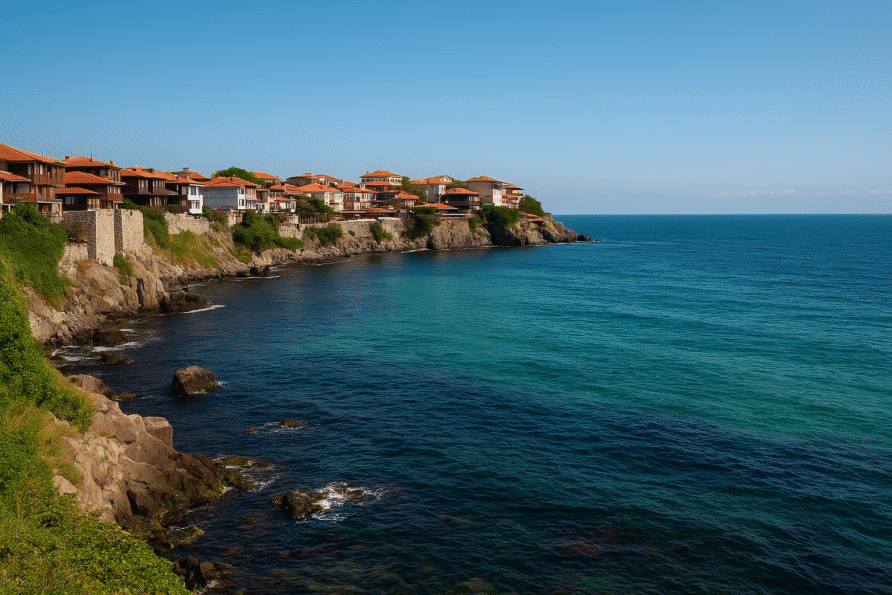
View of Sozopol Bay, Bulgaria, with traditional terracotta-roofed houses on coastal cliffs and calm turquoise sea under clear blue sky.

The Southern Black Sea coast has always been attractive to international tourists. This article examines the main markets—Romania, Turkey, Greece, Germany, Ukraine, and the United Kingdom—and analyses the changes between 2019 and 2024. It highlights the new trends that shape tourist flows to Sozopol, Burgas, and nearby resorts.

The southern part of Bulgaria’s Black Sea coast attracts visitors with its pleasant climate, cultural heritage, and affordable prices. Over the past decade, it has become a preferred destination both for neighbouring countries and for guests from farther away. The health crisis transformed the tourism market—some countries returned to the map while others reduced their presence. Understanding these shifts helps local hoteliers and travellers alike to plan their summer holidays more effectively. The following data show how tourist traffic to Sozopol, Burgas, and several nearby resorts evolved from 2019 to 2024 and which countries are now most important for the region..

Traditional top markets

Before 2020, the main foreign tourists along the southern coast came from Romania, Germany, and the United Kingdom. In 2019, Bulgaria registered 3.4 million Romanian visitors, 1.27 million Greeks, and 1.25 million Germans . British visitors were also significant—around 0.59 million people . This steady influx was concentrated mainly in resorts such as Sunny Beach, Sozopol, and Pomorie, contributing to high occupancy in July and August.

Changes after 2022

Following the reopening of borders, several notable trends emerged. Most importantly, the number of tourists from Turkey increased sharply—from 1.63 million in 2019 to 2.29 million in 2024 . This rise is due both to the devaluation of the Turkish lira, which makes Bulgaria attractive for shopping, and to the boom of cross-border retail tourism in cities like Burgas. At the same time, visits from Romania dropped to 2.33 million, but Romania remains Bulgaria’s leading market .

Equally impressive is the growth of visitors from Ukraine—from 0.6 million in 2019 to 1.28 million in 2024 . Some are long-term residents or transit travellers, but many choose the Black Sea coast for relaxation during the war. In contrast, the number of German and British tourists declined: in 2024 Bulgaria received about 0.92 million Germans and 0.4 million Britons, a substantial decrease compared to 2019 . The main reasons include strong competition from Turkey and Greece and limited air connectivity in the first years after the pandemic.

New trends and regional impact

The growth of Turkish and Ukrainian tourists has had a major effect on the southern coast. Many of them prefer smaller resorts around Sozopol and Primorsko, where prices are affordable and the atmosphere more relaxed. Romanian and Polish travellers, though fewer in number, still fill hotels during peak months. By 2023–2024, a visible return of Czech and Slovak guests has also been noted—visitors who value the cultural and natural landmarks of Burgas and its surroundings.

These developments demand a flexible marketing strategy. Tour operators should focus on markets with the greatest growth potential—Turkey, Ukraine, and Poland—while also working to rebuild the German and British segments through improved flight connections and fresh travel packages. For local businesses, it is essential to adapt services to new audiences—for example, by providing information in Turkish and Ukrainian and maintaining competitive pricing.

Conclusions

Data show that the tourism market along Bulgaria’s southern Black Sea coast is dynamic and undergoing major change. Romania remains the leading market, but by 2024 Turkey ranks second in visitor numbers, while Ukraine emerges as a new key source of tourists. Meanwhile, the decline in German and British guests calls for active measures to attract and retain these segments. The growing diversity of visitors choosing resorts such as Sozopol and Burgas bodes well for the 2024 season and beyond—but success will depend on the industry’s ability to adapt to these new realities.
Profile of Summer Tourists in Bulgaria

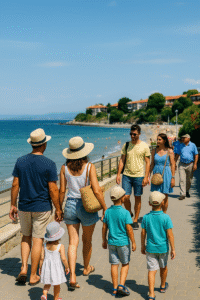
Age Groups, Families and Demographic Features

The summer tourism market in Bulgaria is characterised by a diverse profile of visitors. This article looks at various demographic groups—families with children, young travellers and retirees—as well as the differences between Bulgarian and foreign tourists. The analysis is based on current data showing changes in visitor behaviour and preferences.

Bulgaria attracts millions of visitors every summer, and understanding their profile is key to developing a successful tourism strategy. One of the main trends in recent years is the increase in the number of domestic trips, which is changing market dynamics. At the same time, a variety of foreign tourists arrive on the Black Sea coast—from families with children to young adventure seekers. In this article we will look at which age groups are the most active, what the average length of stay is and what preferences different segments show. The goal is to outline data and conclusions that will help both businesses and tourists when planning future trips.


Demographic profiles of tourists

The summer holiday on the Black Sea attracts a wide spectrum of people. According to official statistics, the largest share of travellers are young and middle‑aged people. In the second quarter of 2025, 36.3 % of Bulgarians who travelled were between 25 and 44 years old. This is the active age group, combining earning capacity and a desire to travel. Among older people (65+ years) 73.2 % of respondents stated that they travelled only within Bulgaria, which shows a strong dependence of this group on domestic tourism.

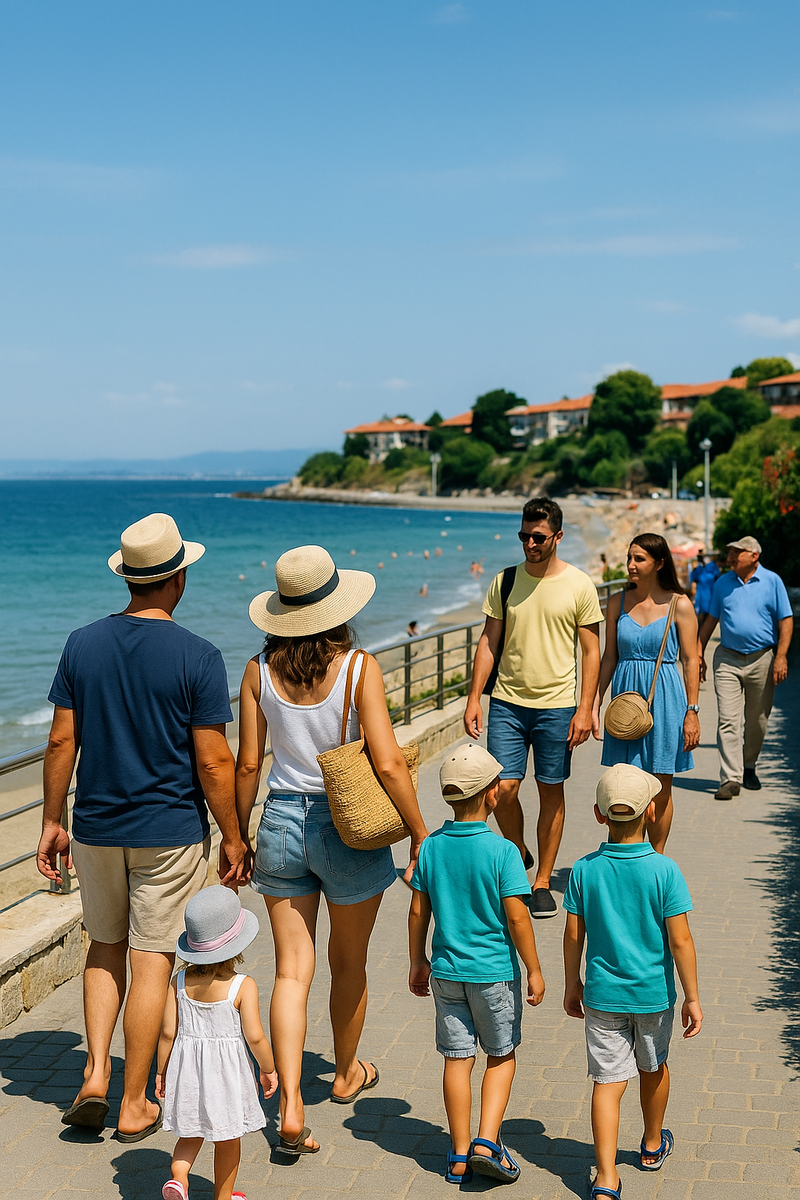
Families with children continue to be an important segment. Data show that they prefer organised holidays at resorts with good service and entertainment for children. Young travellers (18–34 years) often choose more affordable places with an active nightlife. Pensioners, on the other hand, travel outside the peak season and look for peace and health procedures, including spa and balneology services.

Domestic and foreign tourists

The pandemic has permanently changed the ratio between domestic and foreign visitors. In 2020–2021 Bulgarian tourists generated about 88 % of total travel expenditure. After the borders opened, the share of foreigners gradually recovered, but the domestic market remains the backbone of the sector. In 2024 Bulgarian tourists were responsible for nearly 45 % of nights spent in the country, which is above pre‑2019 levels.

Foreign tourists are mainly from Europe, but their profile is changing. While in previous years the main markets were Romania, Germany and the United Kingdom, after 2022 there has been an increase in visitors from Turkey and Ukraine. Attracting these new markets is key to balancing different tourist groups and filling resorts during the season.

Preferences and behaviour

Different segments also have different accommodation preferences. Studies show that over 90 % of nights in Bulgaria are spent in hotels, and 72.7 % of nights of foreigners and 42.7 % of Bulgarians are in 4‑ and 5‑star hotels. This means that despite the growing supply of holiday apartments and villas, traditional hotels remain the preferred choice—especially for foreign guests.

There is also a difference in the length of stay. Bulgarian tourists spend an average of about 2 nights per trip, while foreigners stay an average of 3.8 nights. This shows that locals travel more often but for shorter periods, whereas foreigners concentrate their holiday into a longer stay.

Conclusions

The profile of summer tourists in Bulgaria is multifaceted. The main age group is 25–44 years, but pensioners also make a large contribution to domestic tourism. The domestic market remains stable in the post‑crisis period, generating almost half of the nights. Foreign markets are diversifying, and new guests from Turkey and Ukraine contribute to the balance of visits. For the tourism sector to be successful, it is important to take account of the diversity of profiles and to develop products that meet the needs of different segments.

Follow us on Social Media