
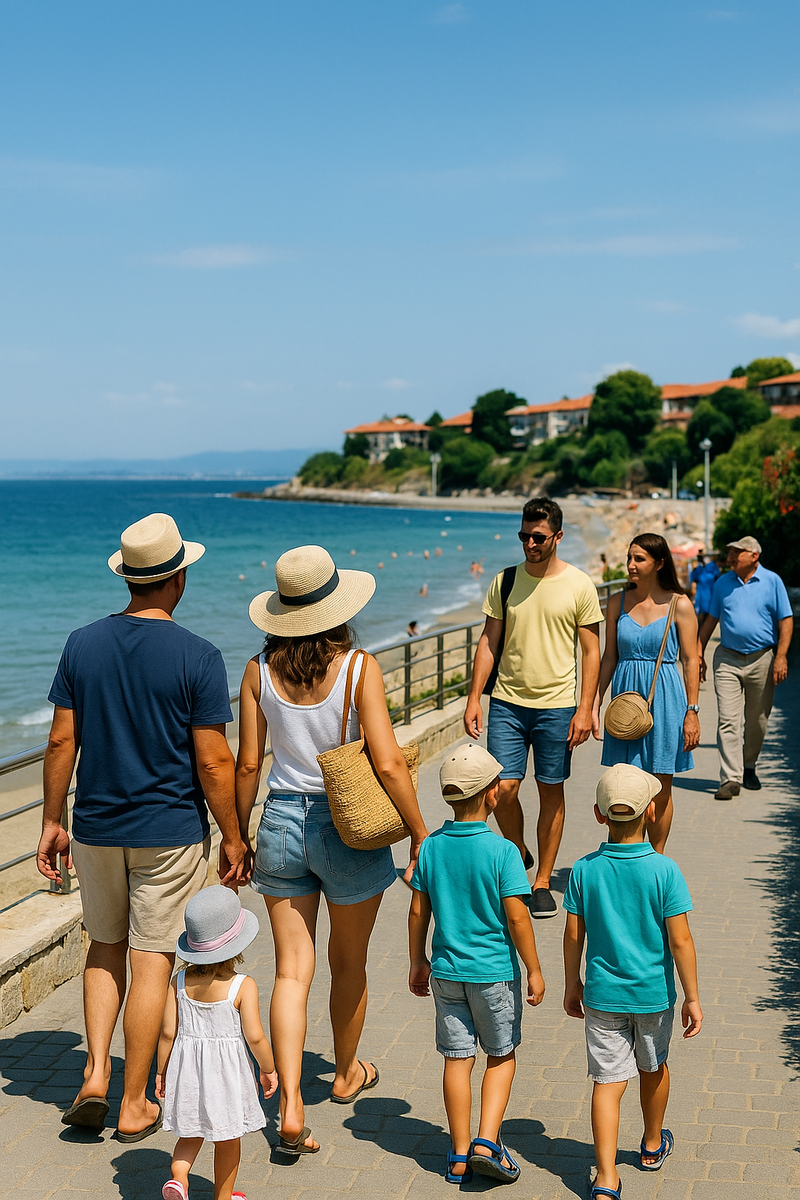
Age Groups, Families and Demographic Features
The summer tourism market in Bulgaria is characterised by a diverse profile of visitors. This article looks at various demographic groups—families with children, young travellers and retirees—as well as the differences between Bulgarian and foreign tourists. The analysis is based on current data showing changes in visitor behaviour and preferences.
Bulgaria attracts millions of visitors every summer, and understanding their profile is key to developing a successful tourism strategy. One of the main trends in recent years is the increase in the number of domestic trips, which is changing market dynamics. At the same time, a variety of foreign tourists arrive on the Black Sea coast—from families with children to young adventure seekers. In this article we will look at which age groups are the most active, what the average length of stay is and what preferences different segments show. The goal is to outline data and conclusions that will help both businesses and tourists when planning future trips.
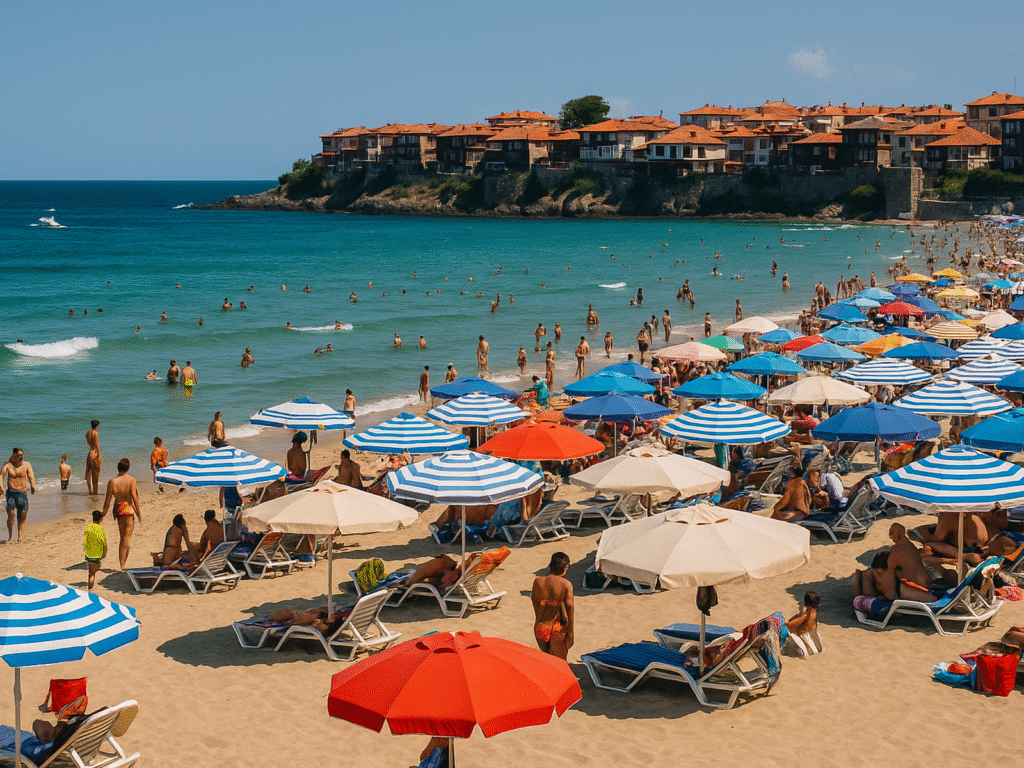
Demographic profiles of tourists
The summer holiday on the Black Sea attracts a wide spectrum of people. According to official statistics, the largest share of travellers are young and middle‑aged people. In the second quarter of 2025, 36.3 % of Bulgarians who travelled were between 25 and 44 years old. This is the active age group, combining earning capacity and a desire to travel. Among older people (65+ years) 73.2 % of respondents stated that they travelled only within Bulgaria, which shows a strong dependence of this group on domestic tourism.
Families with children continue to be an important segment. Data show that they prefer organised holidays at resorts with good service and entertainment for children. Young travellers (18–34 years) often choose more affordable places with an active nightlife. Pensioners, on the other hand, travel outside the peak season and look for peace and health procedures, including spa and balneology services.
Domestic and foreign tourists
The pandemic has permanently changed the ratio between domestic and foreign visitors. In 2020–2021 Bulgarian tourists generated about 88 % of total travel expenditure. After the borders opened, the share of foreigners gradually recovered, but the domestic market remains the backbone of the sector. In 2024 Bulgarian tourists were responsible for nearly 45 % of nights spent in the country, which is above pre‑2019 levels.
Foreign tourists are mainly from Europe, but their profile is changing. While in previous years the main markets were Romania, Germany and the United Kingdom, after 2022 there has been an increase in visitors from Turkey and Ukraine. Attracting these new markets is key to balancing different tourist groups and filling resorts during the season.
Preferences and behaviour
Different segments also have different accommodation preferences. Studies show that over 90 % of nights in Bulgaria are spent in hotels, and 72.7 % of nights of foreigners and 42.7 % of Bulgarians are in 4‑ and 5‑star hotels. This means that despite the growing supply of holiday apartments and villas, traditional hotels remain the preferred choice—especially for foreign guests.
There is also a difference in the length of stay. Bulgarian tourists spend an average of about 2 nights per trip, while foreigners stay an average of 3.8 nights. This shows that locals travel more often but for shorter periods, whereas foreigners concentrate their holiday into a longer stay.
Conclusions
The profile of summer tourists in Bulgaria is multifaceted. The main age group is 25–44 years, but pensioners also make a large contribution to domestic tourism. The domestic market remains stable in the post‑crisis period, generating almost half of the nights. Foreign markets are diversifying, and new guests from Turkey and Ukraine contribute to the balance of visits. For the tourism sector to be successful, it is important to take account of the diversity of profiles and to develop products that meet the needs of different segments.